
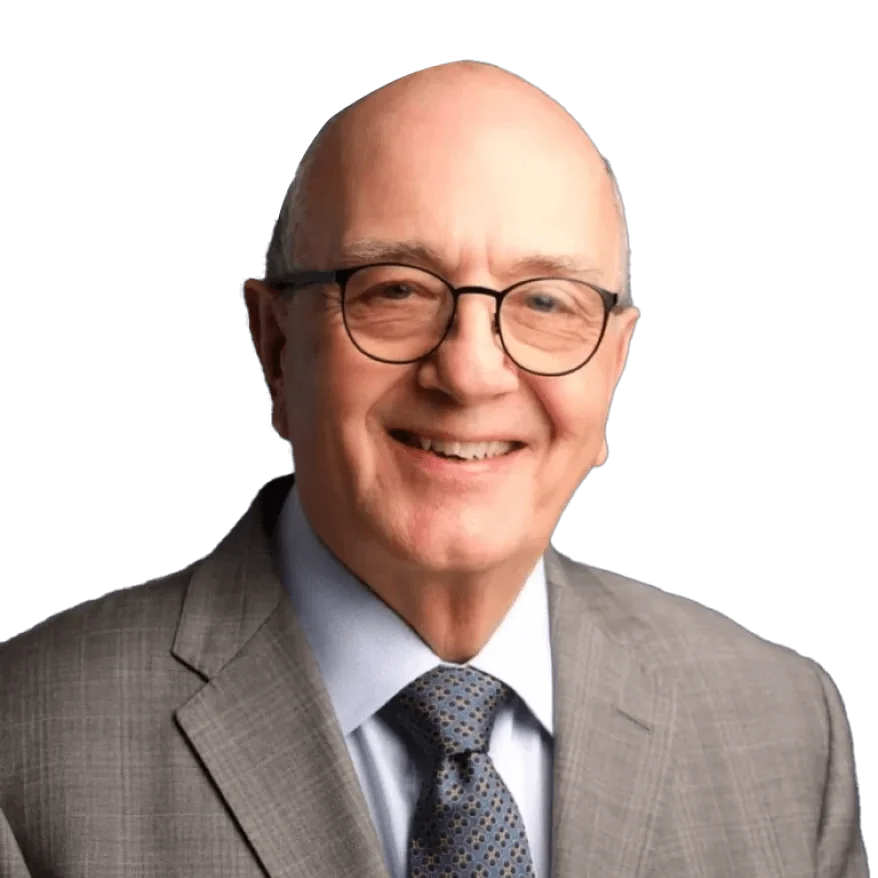
Profile for Charles Field
"When [Charles] later met David Sanford in San Diego, the move into ERISA litigation felt less like a pivot than a recombination of knowledge. Sanford brought trial experience; Charles brought an insider’s understanding of institutional finance. Together, they built a practice focused on the distance between how systems are designed and how they actually function when tested in court."
On a drive from Delhi to Agra, Charles Field once found himself inching along a road that seemed to contain more life than infrastructure. Traffic moved in no particular order. Trucks stacked high with people. Motorbikes threading through gaps that did not look like gaps. Water buffalo darting out from the side of the road. At one point, an elephant appeared as if it belonged there more than anything else. A few miles later, a man stepped out with a muzzled dancing bear, offering a performance to whoever would stop long enough to notice. Charles remembers it less as a story with a point than as a sequence of things happening at once, all of them insisting on being seen.
For Charles Field, travel has a way of loosening whatever sense of order he arrives with. He grew up in a small town in rural Indiana, with a population of seven hundred, where the limits of the world were not theoretical but geographic; some roads were still unpaved, some homes still without indoor plumbing, and leaving felt like a slow widening of what reality could reasonably include.
After college, he worked for a non-profit that organized continuing legal education programs for lawyers across the state. That proximity to aspiring legal professionals became its own kind of education. He attended enough seminars to see the law as less a single system than a collection of overlapping ones, and it was securities lawyers, in particular, who stayed with him. They moved through complexity with a wise fluency, neither removed from the system nor consumed by it, and there was a collegial ease to them that made the work feel, unexpectedly, like something shared rather than guarded.
He went to law school soon after, though his path did not immediately settle into litigation. For twenty-five years he served as in-house counsel at a large institutional investment management firm, working inside the architecture of pension funds, municipal portfolios, and university endowments—systems designed to hold other people’s futures at scale. From within that structure, what became increasingly visible was how often coherence depended on jurisdiction, interpretation, and small procedural differences that rarely appeared in any formal description of how things were supposed to work.
That insight sharpened through a series of interactions in the global market. From handling disputes with the Indian Ministry of Finance to dealing with failed investments in Russia, he learned that finality in law was not a fixed condition but something contingent on place, practice, and access. Over time, these were not anomalies but variations on a theme: systems behaved differently depending on where they operated, and sometimes differently than even their architects anticipated.
When he later met David Sanford in San Diego, the move into ERISA litigation felt less like a pivot than a recombination of knowledge. Sanford brought trial experience; Charles brought an insider’s understanding of institutional finance. Together, they built a practice focused on the distance between how systems are designed and how they actually function when tested in court.
One of the defining cases involved UnitedHealth, which ultimately settled for $69 million after years of litigation. By then, Charles was working fully within plaintiff-side practice, using the same institutional knowledge he had developed in finance to interrogate how those systems behaved when challenged from the outside.
In conversation, he is quick to smile, often amused mid-story, as if still slightly surprised by the trajectories his own life has taken. Colleagues describe him as steady and unguarded, someone equally comfortable explaining complex financial structures or laughing at their absurdities. There is a collegial ease to him that mirrors the early lawyers he once noticed at continuing education seminars, the ones who seemed to move through systems without ever fully hardening into them.
Outside of work, he begins most mornings with a three-mile hike through the canyons in San Diego, a routine that feels less like discipline than continuity. He has been married for thirty-eight years; his son is a doctor, his daughter a lawyer. The family has traveled extensively, across five continents, often together, and he returns often in conversation to that road between Delhi and Agra, where nothing moved in isolation and everything seemed to be happening at once. For him, it remains less a story than a way of seeing: that systems are never as orderly as they appear from a distance, and that understanding them often begins only once you are already inside their motion.
Charles Field, San Diego Managing Partner
Charles Field, San Diego Managing Partner & Financial Services Litigation Practice Group Chair
Everything You Need to Know About Your 401(k) in One Video | ERISA Attorney Charles Field
Major Cases
- TIAA ERISA Class Action
- The Capital Group ERISA Class Action
- Twitter Severance Plan Class Action
- UnitedHealth Certified ERISA Class Action
- Walgreens ERISA Class Action
- Eaton Vance ERISA Breach of Fiduciary Duty Class Action – $3.45 Million Settlement
- VentureMoney Management Co. Investor Fraud
- Transamerica ERISA Class Action
- Madison Avenue Securities LLC FINRA Arbitration – $2.1 Million Award
- General Electric ERISA Class Action
- Madison Avenue Securities FINRA Claim
Publications
- noitem
Blogs
- The Ninth Circuit Reverses Course and Finds Calif. AB 51 Preempted by the FAA. Co-Author.
- Navigating the Mutual Fund Maze, Part 5: Board of Directors. Co-Author.
- Navigating the Mutual Fund Maze, Part 4: Evaluating Investment Performance. Co-Author.
- Navigating the Mutual Fund Maze, Part 3: The Prospectus. Co-Author.
- Navigating the Mutual Fund Maze, Part 2: Fees and Expenses. Co-Author.
- Navigating the Mutual Fund Maze, Part 1: What Is a Mutual Fund?. Co-Author.
- Sanford Heisler Sharp McKnight Files ERISA Class Action Case Against TIAA on Behalf of More Than 28,000 Retirement Plan Participants. Co-Author.
- The Employee Retirement Income Security Act (ERISA) Is 50. Will It Live to See 100?
- Navigating The Mutual Fund Maze, Part 4: Evaluating Investment Performance
- Navigating The Mutual Fund Maze, Part 3: The Prospectus
- Navigating The Mutual Fund Maze, Part 2: Fees And Expenses
- Navigating The Mutual Fund Maze, Part 1: What Is a Mutual Fund?
- Working For Your 401(k) Rights
- Investors Have Rights To Recover Attorney’s Fees In California
- FINRA Arbitration Suffers Reputational Setback in Suit That Highlights Unfair Expungement System
- Pensions Score Wins Over Investment Advisers
- ESOP Abuses Can Cost You Plenty: Understanding Valuations of Employee-owned Stock
- Goldman Sachs and Morgan Stanley Accused of Stock Dump, Trading on Insider Information
- 401(k) Participants Can Be Prime Targets of Cross-Selling Efforts
- Now is a Good Time to Judge Your Company’s Management of Its 401(k) Plan
- Kick-Backs Put Deutsche Bank in SEC’s Crosshairs
- It’s Great You Have a 401(k) – But Who’s Minding the Store?
- Pump and Dump Schemes: The Trojan Horse of Investments
- Investor Trap: Beware of the Churn and Burn
- 5th Circuit Kills DOL Fiduciary Duty Rule
- Sanford Heisler Sharp McKnight is Investigating Misconduct Involving Options Assignment
- SEC Proposes Regulation to Enhance Investor Protection
- Fraudulent Investment Schemes Continue to Plague Investors: Beware of the “Red Flags”
- FINRA Acts to Protect Senior Investors
- Cryptocurrencies: A Virtual Mine Field
- California Financial Elder Abuse Statute – A Powerful Weapon for California’s Seniors
- Investment Fraud – Traps for the Unwary