
Profile for John McKnight
"What [John] has found in qui tam work is a practice that accommodates the same impulse
that once drew him toward the page: the desire to look carefully at something the world has agreed to overlook,
and say what is actually there. The prose did not become a career. But the way of moving through the world that made
him want to write it, the attention to texture and subtext, the willingness to sit with ambiguity until it yields
something true, that is still the instrument he works with. The law, for John McKnight, is one more form the question can take."
John McKnight wanted to be a writer. He grew up in Washington, DC, moved to Maryland for high school, studied at the University of Michigan, and then did what people who want to write tend to do: moved to New York, enrolled in a master’s program in creative writing at the New School, and worked whatever jobs kept him in the city. He lived for a stretch on 38th Street in a building that was not really zoned for residents, until the landlord turned off the water one day and resolved the question of whether to stay. The manuscript he had been working on stalled around two hundred pages. Agents wanted three hundred fifty before they would take a meeting, and the people getting meetings already knew somebody. He looked at the landscape clearly and made a lateral decision. His parents were both lawyers. The degree was flexible. He enrolled.
What he carried into law school, and never really left behind, was an attention to the world that moves beneath its surface. When he describes his travels, this comes through in the texture of the telling. During law school he spent several months in China through the University of Maryland’s International and Comparative Law Clinic, moving through Beijing, Sichuan, and Shanxi provinces and eventually into Yunnan, right by the border with Myanmar. The official assignment was a report on the microcredit industry. What he remembers is something harder to transcribe: skyscrapers going up faster than seemed possible, a palpable sense that the distance between an idea and its realization was shorter there than anywhere he had been. He had started learning Mandarin before the trip, reasoning that even a few words changed what you could access and who would talk to you. The language also gave him something less practical: a new way of noticing that meaning accumulates differently in Chinese, that two characters read separately mean one thing and together mean something the translation cannot quite hold. He still takes classes now, years later, because the language cost him too much effort to abandon. He also takes French, which he picked up during the pandemic after his parents returned from a trip transformed.
His approach to law school followed the same instinct that had kept him alive in the arts: find the parts that ask something real of you, and build around those. He estimates he avoided taking classes for close to a year and a half, filling the time with externships, clinical work, and an internship with the Human Rights team at the World Health Organization in Geneva, where he sat in on General Assembly sessions and moved through rooms full of diplomats and NGO representatives. China was more formative. The research required him to see past the official account of an industry and understand how it actually functioned — who it served, what pressures shaped it from the inside.
Qui tam work rewards exactly this. The cases begin with a client who has part of the story and no access to the rest. Evidence has been distributed or buried somewhere in the internal record of a company that believed its operations were invisible. The job is reconstruction — reading thousands of emails with the attention of someone who knows the meaning is not always in the sentence but in what surrounds it, what is absent, what appears once and never again. His representations have included the former Chief Security Officer of Wells Fargo in the fake account scandal, which produced three and a half billion dollars in fines and penalties, and a former contracts director at Navistar who alleged the company had overcharged the Department of Defense on armored vehicle purchases, settling for fifty million.
Outside of the work, he rides a motorcycle when the weather allows and tinkers with it when it doesn’t. He plays video games, watches the Washington Wizards with the loyalty that commitment requires, and his cat has developed a reliable instinct for when the workday should end.
He does not think of himself primarily as a lawyer, and he will say this directly if you ask. What he has found in qui tam work is a practice that accommodates the same impulse that once drew him toward the page: the desire to look carefully at something the world has agreed to overlook, and say what is actually there. The prose did not become a career. But the way of moving through the world that made him want to write it, the attention to texture and subtext, the willingness to sit with ambiguity until it yields something true, that is still the instrument he works with. The law, for John McKnight, is one more form the question can take.
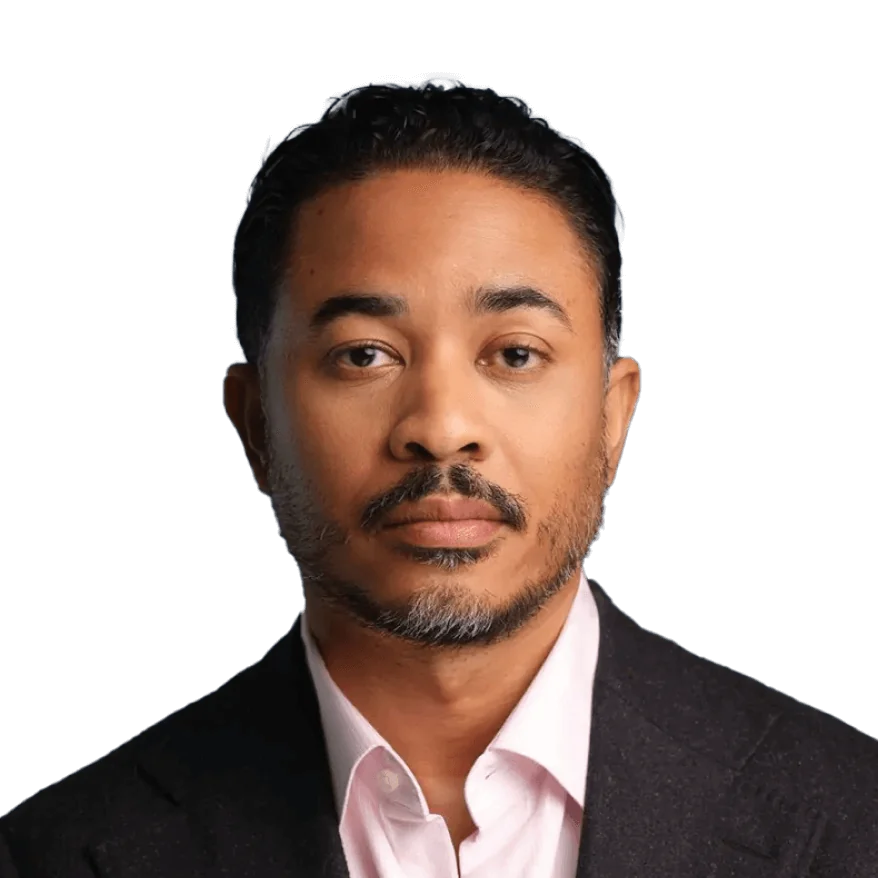
John McKnight, Washington, DC Partner
John McKnight, DC Partner and Whistleblower & Qui Tam Practice Group Co-Chair
John McKnight, DC Partner and Whistleblower & Qui Tam Practice Group Co-Chair
Major Cases
- International Vitamin Corporation – $22.865 Million Settlement
- United States ex rel. Sherwin v. Office Depot(Los Angeles County Superior Court) – $68 Million Settlement
- United States ex rel. Cox Et Al v. Medtronic(D. Minn.) – $23.5 Million Settlement
- United States ex rel. Cox v. Smith and Nephew(W.D. Tenn.) – $11 Million Settlement
- United States ex rel. Yuxin “Jay” Fang v. Fortinet, Inc., et al.
Publications
- How Are We Doing in Protecting Whistle-Blowers From Retaliation? “Trends and Developments”: Chambers and Partners 2024 Employment Guide
- Mayday: what everyone should know about correctly valuing cryptocurrencies, Global Restructuring Review, August 22, 2022.
- Are Employees (and Other Whistleblowers) Protected from Retaliation?, Chambers and Partners, July 22, 2022.
- The Need for Clarity: Whistleblowers in an Opaque, Digital World, Global Data Review, June 2022.
- As the Government Prioritizes Cybersecurity Fraud, Whistleblowers Are Vital to Rooting It Out Taxpayers Against Fraud, 2022
Blogs
- Fake Pallets, Real Penalties: How a $549.5 Million Settlement Redefined Customs Fraud Enforcement Under the False Claims Act, Co-Author.
- The Fall of Done Global: When Telehealth Becomes a Pipeline for Controlled Substances, Co-Author.
- South Korea’s 75-Year-Old Tax Whistleblower Program Just Got Stronger and the World Is Watching, Co-Author.
- Fraud in Startup Wonderland, Co-Author.
- Fraud against Autistic Individuals, Their Loved Ones, and Beyond, Co-Author.
- Swifties Sue Ticketmaster: Implications for Consumers and Investors
- Automation: Effective or Efficient? Mass Layoffs and the Future of the Tech Industry
- Lawyers on Layers: The Regulatory Future of Decentralized Finance
- Intangible Possessions, Tangible Fraud: Plagiarism and NFTs
- The New Big Brother: Privacy, Cybersecurity, and the Metaverse
- “The Wild West”: The Need for Cryptocurrency Regulation
- Sarbanes-Oxley: Private or Public?
- Confidentiality Agreements as the Basis for False Claims Act Suits
- Whistleblowing Under Dodd-Frank and the Foreign Corrupt Practices Act
- Dual-Pronged Protections for Record-Keeping Whistleblowers
- GSA Pricing Fraud Basics: What is it and what should you look for?
- If you’re wondering what’s keeping women out of STEM, don’t discount sexual harassment
- Agent Scully and the Hollywood Wage Gap
- “Master of None” and the Freedom to Be Average
- Womenomics
- Speedy Ortiz FTW
- Beyond Seventy-Eight Percent
- The United States, China, and the STEM Gender Gap